Cytogenetics
In biology, a cell is the structural, functional, and biological unit of all organisms. It is an autonomous self-replicating unit that may exist as a functional independent unit of life (as in the case of a unicellular organism), or as a sub-unit in a multicellular organism (such as in plants and animals) that performs a particular function in tissues and organs. Basic difference between animal cell and plant cell is cell wall which is present in plant cell wheras there is no cell wall in animal cell. There are two types of orgsnism; prokaryiotes (no nucleus) and end eukaryotes, which contains nucleus. Cytogenetics is a mixture of two words; cytology and genetics. Cytology means study of cytoplasm and its organelles, such as mitochondria, ribosome, endoplamic reticulum, and golgi bodies etc., whereas Genetics is the branch of biology concerned with the study of the DNA of organisms, how their DNA manifests as genes, and how those genes are inherited by offspring. Genes are passed to offspring in both sexual and asexual reproduction, and over time natural selection can accumulate variations amongst individuals on the group level, in the process known as evolution. Instructions needed to direct activities are contained within a DNA (deoxyribonucleic acid) sequence. DNA from all organisms is made up of the same chemical units (bases) called adenine, thymine, guanine, and cytosine, abbreviated as A, T, G, and C. In complementary DNA strands, A matches with T, and C with G, to form base pairs. The human genome (total composition of genetic material within a cell) is packaged into larger units known as chromosomes—physically separate molecules that range in length from about 50 to 250 million base pairs.
- Improving health through automation
- Strict quality practices
- Health, wellness and insurance
- Medical Specialties
- Highest Quality Results
- Affordable Health Packages
Chromosomes are infact thread-like structure present in the nucleus of plant and animal cells. Chromosomes are the vehicle that carries DNA (the genetic material of the cell) wrapped around by the histone proteins. Each gene has a unique DNA sequence. Genes comprise only about 29 percent of the human genome; the remainder consists of non-coding regions, whose functions may include providing chromosomal structural integrity and regulating where, when, and in what quantity proteins are made.
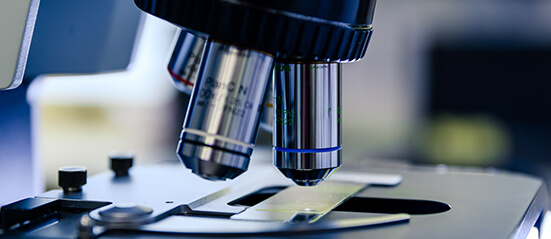
The human genome is estimated to contain 20,000 to 25,000 genesHuman cells contain two sets of chromosomes, one set inherited from each parent. Each cell normally contains 23 pairs of chromosomes, which consist of 22 autosomes (numbered 1 through 22) and one pair of sex chromosomes (XX or XY). However, sperm and ova normally contain half as much genetic material: only one copy of each chromosome. Almost all the body cells of the body possess chromosomes. Chromosomes are pretty long structures spanning nearly 6ft from end to end. However, chromosomes can be visualized under a microscope only in the metaphase stage of cell division when all the genetic material is in a highly condensed state wherein it can be visualized as an X-shaped structure with two sister chromatids attached to each other at a centromeric point or the centromere.